Canon Inkjet Printers: PIXMA, MegaTank, Real Cost
Updated
Canon sells two completely different deals under one logo, and the badge on the box decides your running cost. One track is PIXMA — small cartridges, cheap to buy, dear to feed. The other is MegaTank — refillable bottles, dearer to buy, cheap to feed. Pick the wrong one for how you actually print and you either overpay at the cartridge shelf or sink money into a tank you never fill.
Canon also runs a small business line called MAXIFY, but for most home and home-office buyers the real choice is PIXMA versus MegaTank.
So, as always here, the only honest way to judge it is over time.
PIXMA and MegaTank, in one line
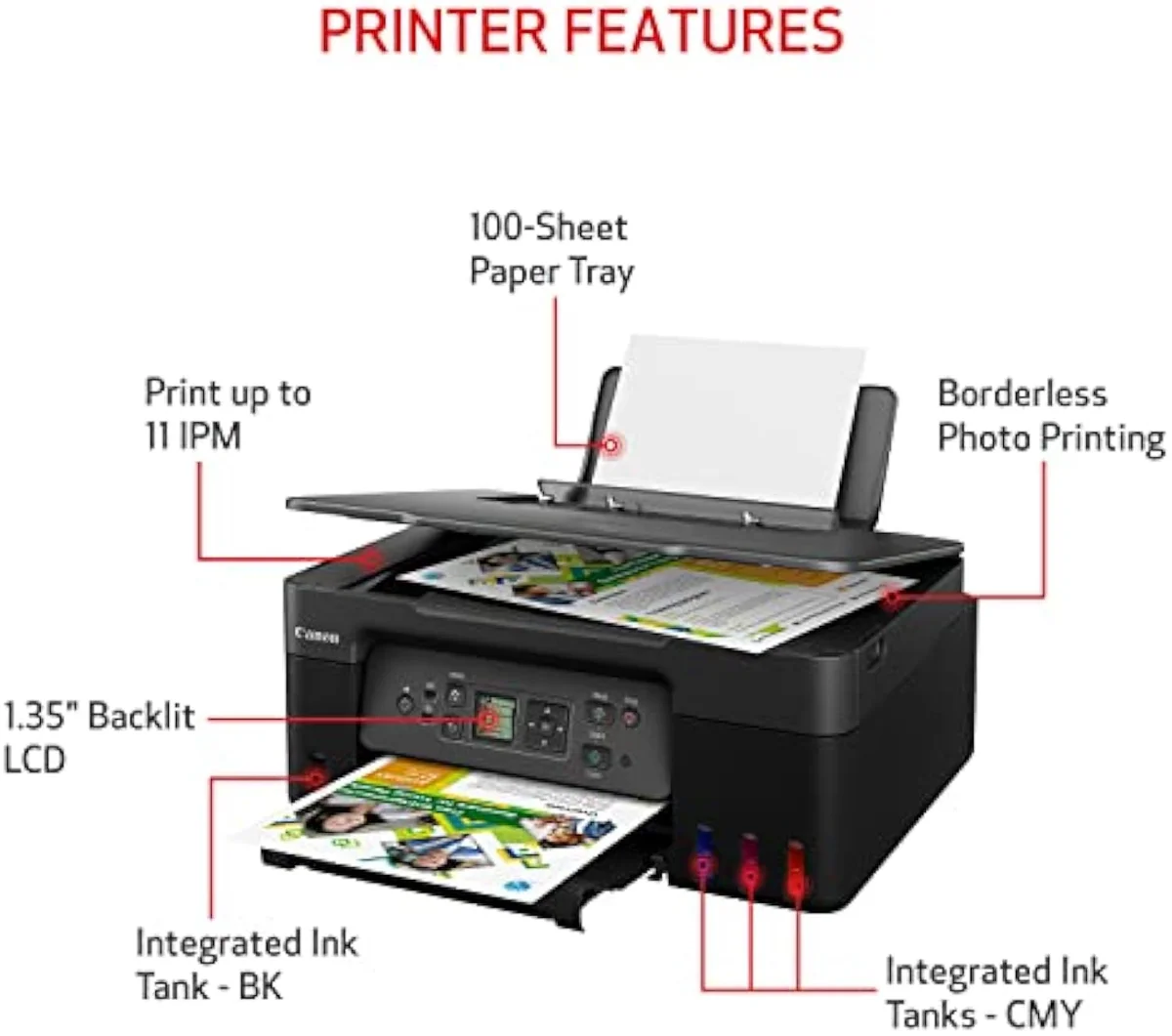
A Canon PIXMA is a cartridge printer; a Canon MegaTank is a refillable supertank. PIXMA loads small CL/PG ink cartridges good for roughly 180 to 400 pages each; MegaTank pours ink from bottles into built-in reservoirs rated in the thousands of pages. Same brand, opposite cost structures.
MegaTank is Canon's name for a continuous-ink supertank — the same idea as Epson's EcoTank and the answer to the question every cartridge owner eventually asks. A continuous ink system trades a higher sticker price for a far lower cost-per-page, because you refill from cheap bottles instead of buying a new cartridge every few hundred pages. Canon's own MegaTank lineup leads with bottle yields in the thousands for exactly that reason. We sort the whole catalog by this kind of fork in our guide to the printer families and how they're structured.
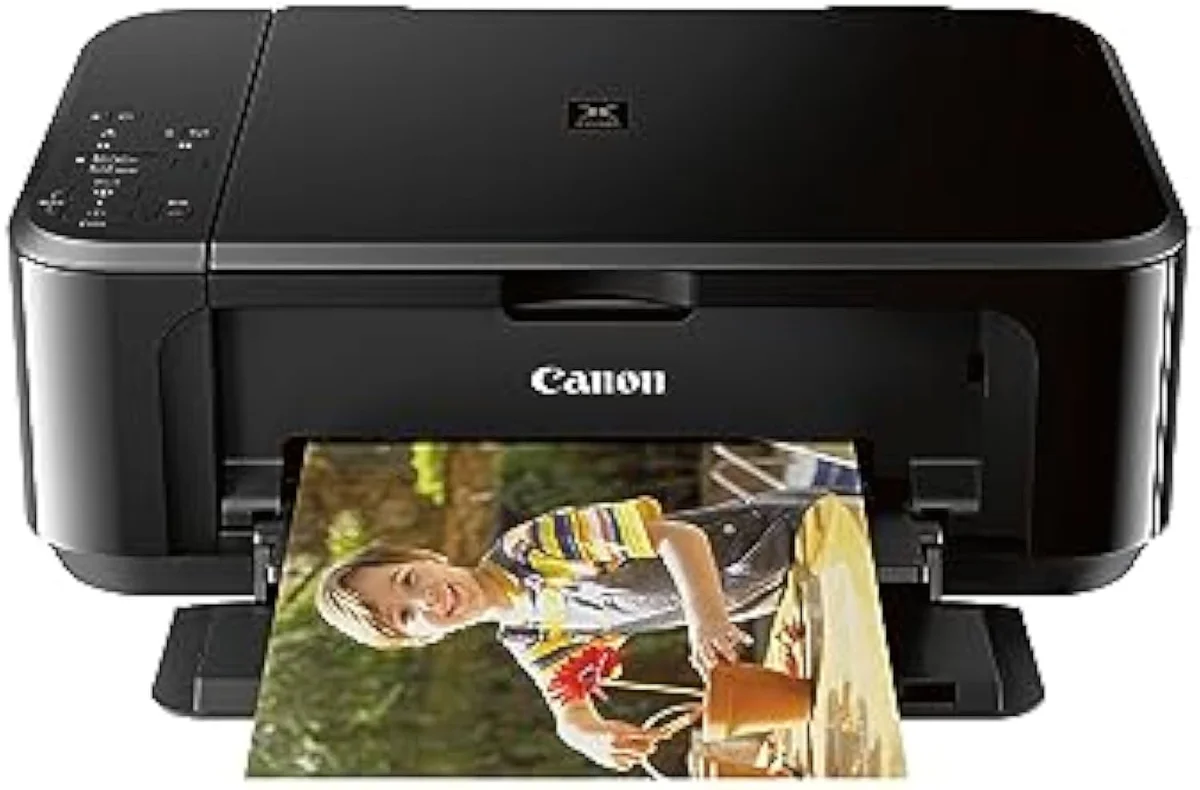
PIXMA (cartridge)
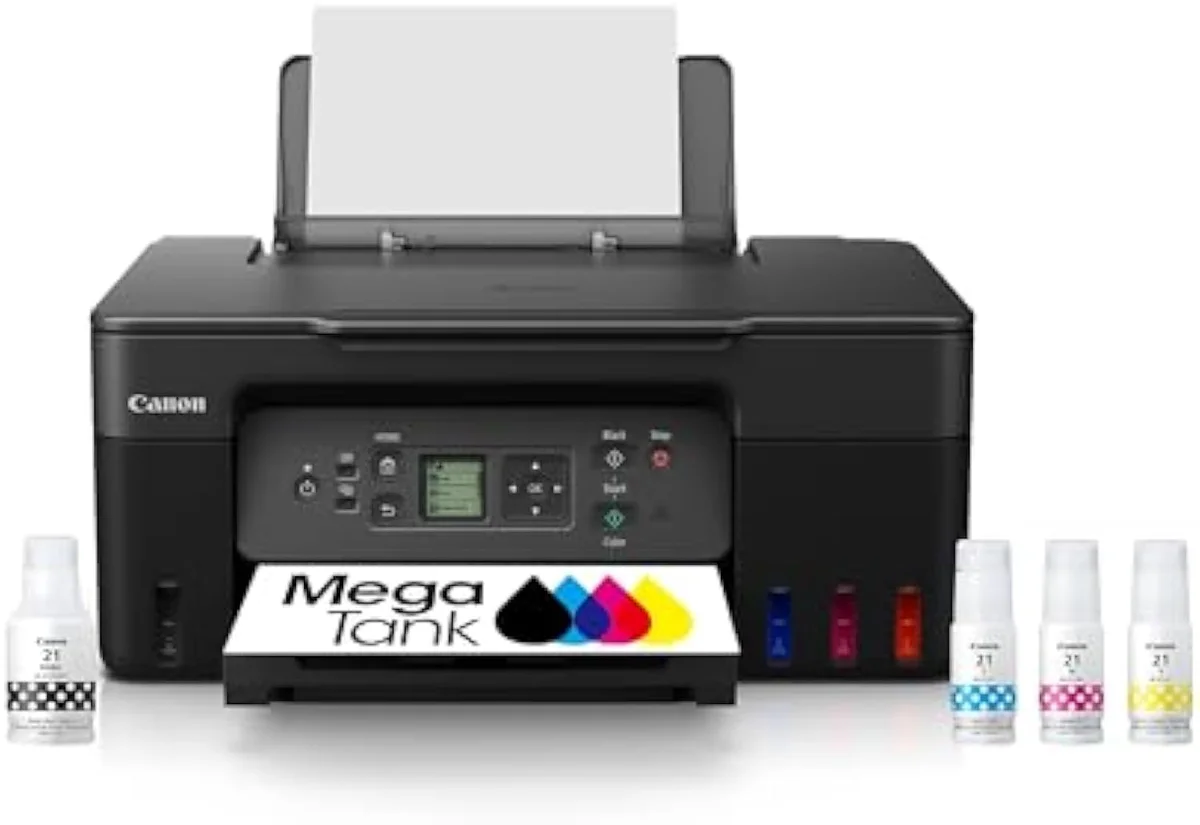
MegaTank (bottle)
Read the model prefix before you read the price. A TR, TS, or MG model is a cartridge PIXMA; a G-series number is a MegaTank. The whole running-cost case turns on which one you carry home, and which one is worth buying — our verdict on whether the Canon PIXMA is any good names the right model for each kind of printer. The TR line even has a portable branch, where the model year barely matters — our breakdown of the difference between the Canon PIXMA TR150 and TR160 shows the newer travel printer is a quiet refresh, not a cheaper page.
Where MegaTank wins on cost
Here's the thing: a MegaTank's premium is a one-time cost, but a PIXMA's cartridge bill repeats forever. Picture two lines over two years. A PIXMA climbs steeply because CL/PG cartridge sets get replaced every few hundred pages; a MegaTank starts higher, then flattens because one bottle set covers thousands of pages. They cross, and after that the tank just keeps winning.
Independent cost-per-print testing at RTINGS, which has lab-tested 182 printers, puts cartridge cost-per-page many times higher than bottle ink — the gap supertanks were built to close. Against a budget PIXMA, a MegaTank G3270 pays back fast for a household that prints weekly — and it is a current model, not a relic, as our breakdown of when the Canon G3270 came out and where it sits today spells out. On the bigger G6020 the in-box bottles run for years, as our answer to how long the Canon G6020 ink lasts lays out. Against light, occasional use, the bottles never get the chance.
The ink-cost runway
≈ 150 pages a month
This is the whole reason InkVerdict exists: to put running cost next to the price, where the brand pages won't. We break the cartridge-versus-tank decision down across the catalog in our type-versus-type tradeoffs analysis.
The photo catch nobody mentions
Canon built its name on photography, so buyers assume any Canon prints great pictures. A MegaTank does not, and that surprise is the brand's most specific complaint.
The logo writes a cheque the four-ink tank cannot cash.
MegaTank G-series machines use a four-ink dye-and-pigment set tuned for low-cost document printing, not the six-ink dye systems Canon reserves for dedicated photo models. One owner of the photo-leaning G620 told our research the color saturation underwhelmed even on glossy paper, and that model has since slipped to legacy stock — we walk through whether the Canon G620 is discontinued and which MegaTank replaces it. The split matters because Canon's dye inks chase vivid color while pigment inks chase sharp, water-resistant text — the dye-versus-pigment ink distinction is why one machine can't be best at both. Want true photo quality? Buy for it on purpose, not by assuming the logo delivers it.
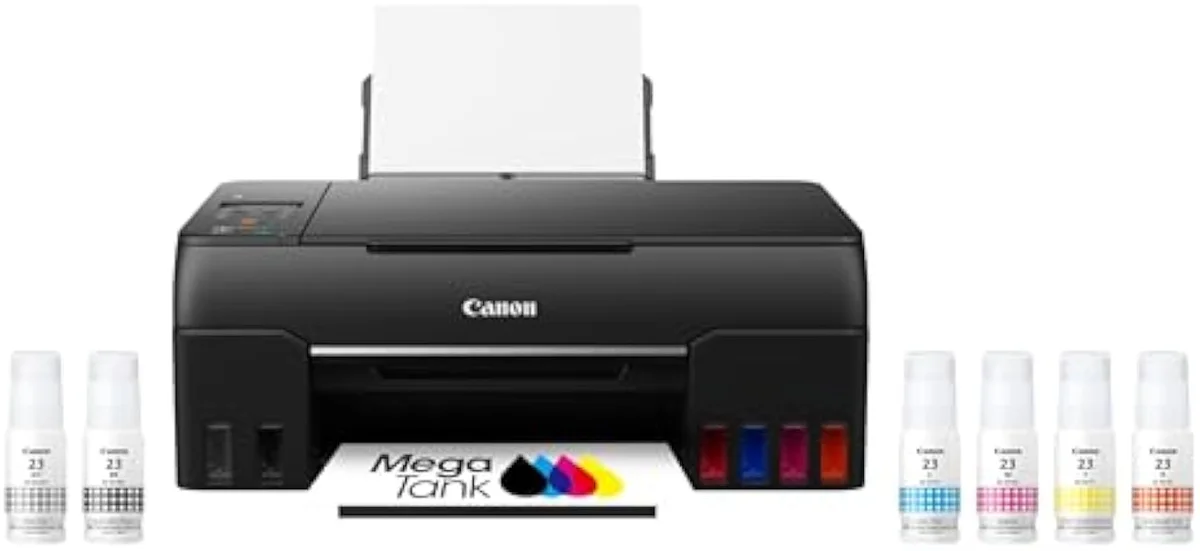
See how Canon's two ink paths stack up against Epson tanks and laser toner, side by side:
Compare cartridge vs tank vs laser →How Canon page yields really behave
Every brand quotes page yield the same flattering way, and Canon is no exception. The number is real, but it describes an ideal Canon never ships you.
Page-yield figures follow the ISO/IEC 24711 standard, which prints a fixed test suite continuously — so a MegaTank bottle rated for thousands of pages assumes back-to-back printing, not a household that prints in bursts. Idle weeks trigger automatic cleaning cycles that spend ink on nothing, so the real-world yield lands below the box. That gap between claimed and lived yield is the category's core trust problem, and it is why we stage every claimed number against synthesized owner reports in our inkjet printers evidence hub.
The clog risk every inkjet shares
Canon runs liquid ink, so it has the one failure mode lasers don't: the ink dries. Leave a PIXMA or a MegaTank idle and ink sets in the nozzles; the machine clears the clog with cleaning cycles that burn ink to recover.
RTINGS scores risk-of-clogging as a first-class printer metric because it is the second-loudest owner complaint after running cost. The fix is free and the same for every brand — print something in color at least once a week. The same idle weeks that clog a nozzle are what make a MegaTank's rated yields look like a lie, so regular use protects both the printhead and the cost case at once. The idle clog sits alongside flat photo saturation and flaky Wi-Fi setup in our rundown of the common problems with Canon printers, and we track clog behavior model by model in our safety and known-risks guidance.
Where Canon sits against HP and Epson
The brand you flee shapes the brand you pick. Canon's pitch lands hardest with buyers angry at HP Instant Ink and cartridge lockouts.
Canon is softer on ink restrictions than HP — it shows non-genuine-ink warnings but has not made firmware ink-rejection routine the way HP did. Editorial testing at PCMag rates Canon's supertank and document machines well for home and home-office duty, the exact ground the no-subscription buyer is heading for. Against Epson, MegaTank and EcoTank are near-direct rivals on bottle economics; the choice often comes down to which model is on sale and which app you can stand setting up over Wi-Fi. We put the entry pair head to head in our Canon G3270 vs Epson ET-2800 comparison, and lay out the exact yardsticks for that call in our printer comparison criteria.
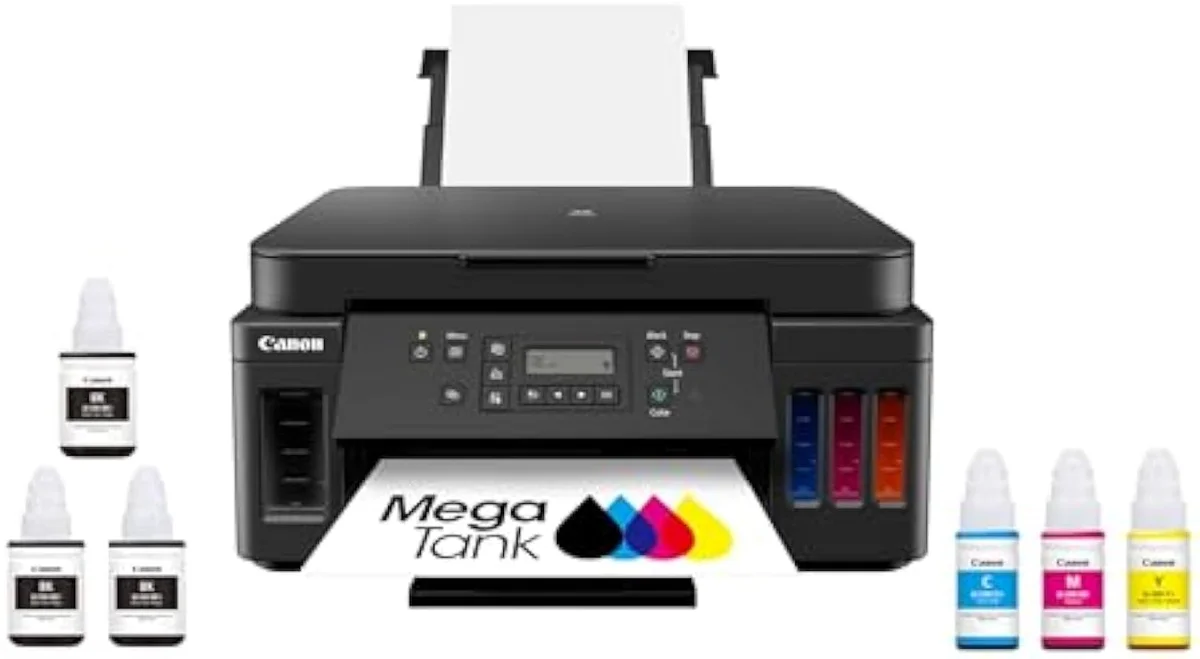
Choosing a Canon inkjet
Match the model to your real print diet, then check the prefix. Volume decides if a MegaTank is worth it at all, and the model number tells you which one you are getting: bottles or cartridges. The full family breakdown — which prefix means what — sits in our printer family structure guide.
Where to start
For a steady household, the MegaTank G3270 is the default Canon — bottle ink, an all-in-one body, and a running cost that clears its premium inside the first year of regular use. Step up to the G6020 if you want automatic duplex for a busier home office, and choose a cheap PIXMA only if you print rarely or need the lowest possible buy-in. The model-by-model reasoning lives in our research layer below.
Frequently Asked Questions
Canon inkjet printers in one paragraph
Canon inkjet printers split into two cost structures: PIXMA cartridge machines (TR, TS, MG) that are cheap to buy and dear to feed on 180-to-400-page CL/PG cartridges, and MegaTank G-series supertanks that cost more up front but refill from bottles rated in the thousands of pages — so a MegaTank like the G3270 pays back its premium inside a year of steady printing while a light printer is better off on a cheap PIXMA; the Canon-specific catch is that the four-ink MegaTanks are built for low cost and document sharpness, not gallery photos, so picture-quality buyers should reach for a dedicated six-ink photo printer instead.
Which is better, Canon PIXMA or MegaTank?
It comes down to how much you print. PIXMA models run on small CL/PG cartridges that empty around 180 to 400 pages and cost a large fraction of a cheap printer to replace; a MegaTank like the G3270 fills from bottles and quotes thousands of pages per set. Print a few pages a month and a PIXMA TR4720 is the cheaper machine to own. Print weekly — homework, labels, recipes — and the MegaTank pays back its higher buy-in inside the first year and keeps saving after.
Do Canon MegaTank printers make good photos?
For everyday color, yes; for gallery-grade photos, manage your expectations. MegaTank uses a four-ink dye-and-pigment set built for low cost and document sharpness, not the six-ink photo systems Canon sells separately. One owner of the photo-leaning G620 told our research the saturation underwhelmed even on glossy stock. If self-printed photos are the whole point, a dedicated six-ink photo printer beats any four-tank office machine.
Why is Canon ink so expensive?
Because the printer is sold cheap and the cartridge carries the margin — the classic razor-and-blades trade the whole category runs on. A PIXMA cartridge set can approach the sale price of the printer it feeds, which is exactly the cartridge tax MegaTank was built to escape with refillable bottles.
Is Canon better than Epson or Brother?
Each brand owns a different job. Canon MegaTank and Epson EcoTank are direct supertank rivals on running cost, and independent testing puts both far below cartridge machines on cost-per-page. Brother leads on office hardware — duplex, document feeders, big trays — without a true bottle tank. Canon edges ahead for households that want low ink cost and decent color in one box; Epson EcoTank matches it bottle-for-bottle; Brother wins a text-heavy home office. Match the brand to the diet, not the badge.
Does Canon block third-party ink with firmware?
Canon is far softer on this than HP. It recommends its own GI bottles and BCI/CL cartridges and shows non-genuine-ink warnings, but it has not made firmware ink-rejection the routine event HP did with its cartridge lockouts. Most owners run aftermarket ink at their own risk without the printer refusing to print.
How long do Canon inkjet printers last?
A well-kept Canon inkjet commonly runs 4 to 6 years, in line with the category. The thing that ends one early is a printhead clog from sitting idle, not mechanical wear — a risk every liquid-ink printer shares.
Compare the Top Picks
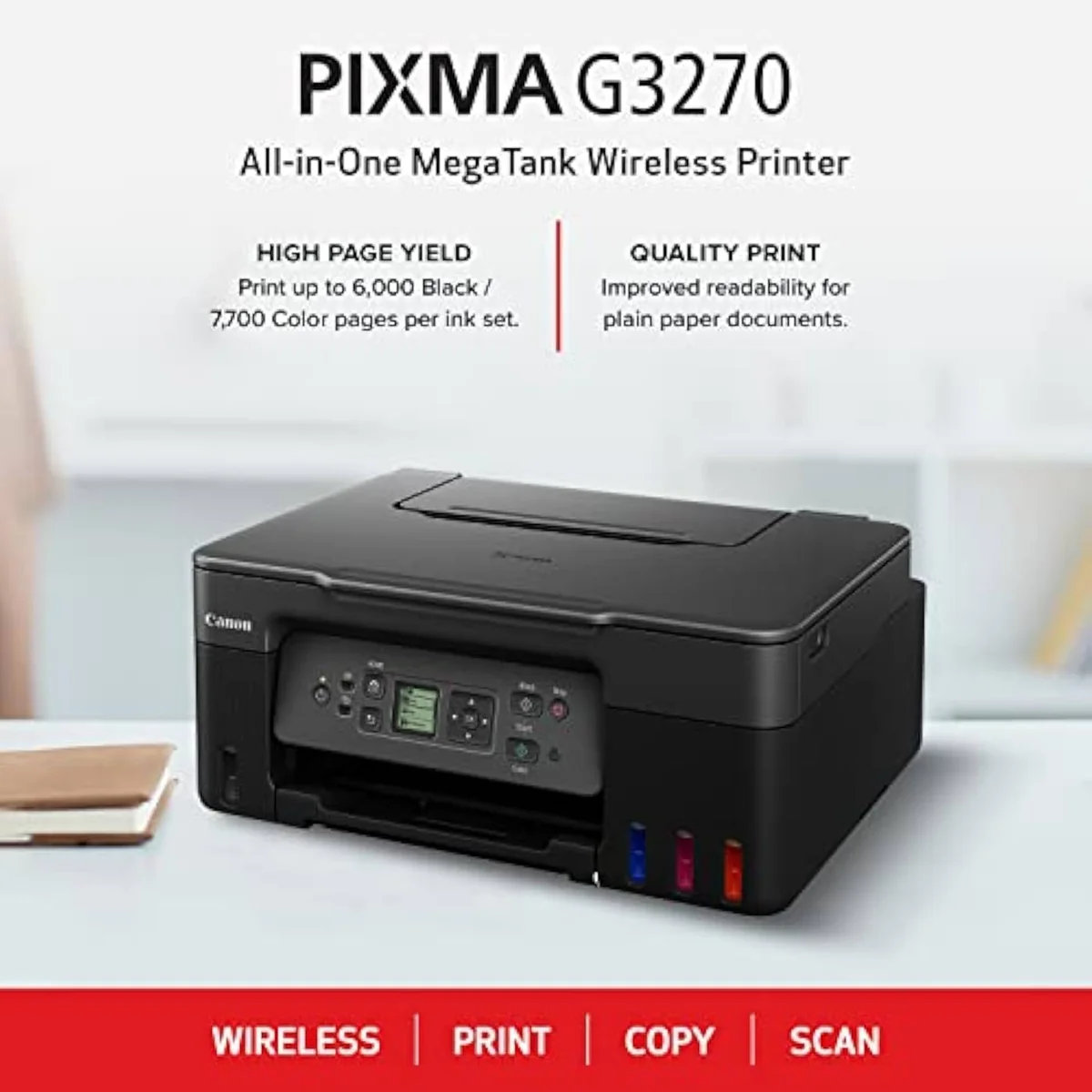
See how the Canon MegaTank G3270 stacks up against the rest of the field.
Keep reading
Two ad-free explainers that take the cost-of-ownership case deeper, model by model:
Sources
- Canon — MegaTank supertank lineup and bottle page-yield claims
- RTINGS — printer test methodology, cost-per-print and risk-of-clogging scoring across 182 models
- PCMag — inkjet and all-in-one printer reviews
- ISO/IEC 24711 — the standard page-yield measurement method (Wikipedia)
- Inkjet printing — dye versus pigment ink and printhead concepts (Wikipedia)
Inkjet Printers notes that actually mention the tradeoffs
Occasional updates on inkjet printers evidence, price movement, and buyer-fit changes.
Only when something changes. Unsubscribe anytime.