Inkjet Printer Evidence Hub
Updated
The evidence-quality vocabulary
Reading printer evidence well starts with the words. Each term below names a kind of claim and tells you which source type can actually back it (RTINGS).
- Independent testing
- Independent testing is measurement run by a party with no stake in the sale — a lab that buys the unit and reports repeatable numbers. It is the strongest evidence for cost-per-print and clog risk, and the reason a lab review outranks a spec sheet (RTINGS).
- Predicted reliability
- Predicted reliability is a survey-derived estimate of how often a model will break, built from member-reported failure rates across thousands of owners rather than one bench sample (Consumer Reports).
- ISO page yield
- Page yield is the number of pages an ink set prints under the ISO/IEC 24711 and 24712 standardized tests. Maker figures are best-case, so real output runs lower and labs re-measure it per model (Wikipedia).
- Cost-per-page
- Cost-per-page is the running cost of one printed page — the ink-set price divided by its rated page yield. It is the single figure that separates a cheap printer from a cheap-to-own printer, the heart of total cost of ownership (Wikipedia).
- Owner-review synthesis
- Owner-review synthesis is the pattern read across hundreds of real buyer reviews — the recurring complaints (clogs, setup, ink cost) that no single five-star or one-star review proves alone. It is our primary lens across the 59 models we track.
- Editorial review
- An editorial review is a hands-on writeup by a publication that tested one unit and reached a verdict. It is strong on setup friction, print quality, and value framing, and weaker as a reliability sample of one (PCMag).
- Encyclopedic reference
- An encyclopedic reference is a neutral explainer of the underlying technology — how a printhead lays dots, what a continuous-ink system is. It defines terms and mechanisms but never ranks a model (Wikipedia).
- Print resolution
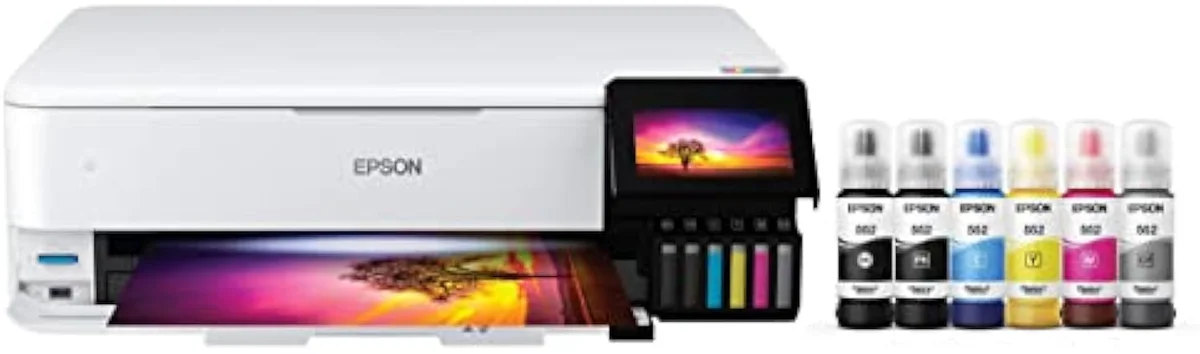
- Print resolution is the density of dots a printer lays down, measured in dots per inch (DPI). Document machines print sharp text at modest DPI; photo inkjets reach 4800 by 1200 DPI or finer for smooth gradients (Wikipedia).
- Manufacturer specification
- A manufacturer specification is the maker's own published number — yield, speed, duty cycle. It is authoritative for what the box claims and least trustworthy where it is unverified, which is why every figure above is cross-checked against independent testing.
Reference categories — kinds of authority
Inkjet evidence comes in five kinds, and each is strong at one job and weak at another. The table names what each category measures well and where it should not be trusted alone (RTINGS).
| Reference category | Example authority | Strongest for | Weak / not for |
|---|---|---|---|
| Independent lab testing | RTINGS (tests 182 printers) | Tested cost-per-print, page yield, risk-of-clogging, document and photo quality | Long-run reliability across many units; sample is 1 per model |
| Institutional survey | Consumer Reports | Predicted reliability and owner satisfaction from thousands of members | Per-model tested cost figures; data sits behind a paywall |
| Editorial review | PCMag, TechRadar, TechGearLab, PCGuide | Setup friction, print-quality verdicts, hands-on value framing | Reliability sample of 1; cost math varies by reviewer |
| Cost-focused analysis | Tech Gadgets Canada | Cartridge-versus-ink-tank cost-per-page math, crossover point | Broad model coverage; tends to focus on supertank lines |
| Encyclopedic reference | Wikipedia | Technology definitions — printheads, dye vs pigment, DPI, continuous-ink systems | Any model ranking, price, or buy recommendation |
Source-coverage matrix — who measures what
The matrix below crosses each source against the seven buying questions owner threads repeat. A check means the source measures it as a first-class output; a dash means look elsewhere (TechGearLab).
| Source | Cost-per-page | Page yield | Clog risk | Reliability survey | Print quality | Setup | Value verdict |
|---|---|---|---|---|---|---|---|
| RTINGS | Yes (tested) | Yes (tested) | Yes (tested) | — | Yes (tested) | Partial | Yes |
| Consumer Reports | Yes | — | — | Yes (survey) | Yes | — | Yes |
| Tech Gadgets Canada | Yes (math) | Yes | — | — | Partial | Partial | Yes |
| PCMag | Partial | — | — | — | Yes | Yes | Yes |
| TechRadar | Partial | — | — | — | Yes | Yes | Yes |
| TechGearLab | Yes | — | — | — | Yes | Yes | Yes (ranked) |
| PCGuide | Partial | — | — | — | Yes | Yes | Yes |
| Wikipedia | — | Defines | Explains | — | Defines (DPI) | — | — |
Source-to-model evidence map
The published reviews behind this hub each anchor to a specific model, which is what makes their numbers checkable. The table maps each source to the model it tested and the buying question it answers best (PCGuide).
| Source | Model tested | Class | Best evidence it supplies |
|---|---|---|---|
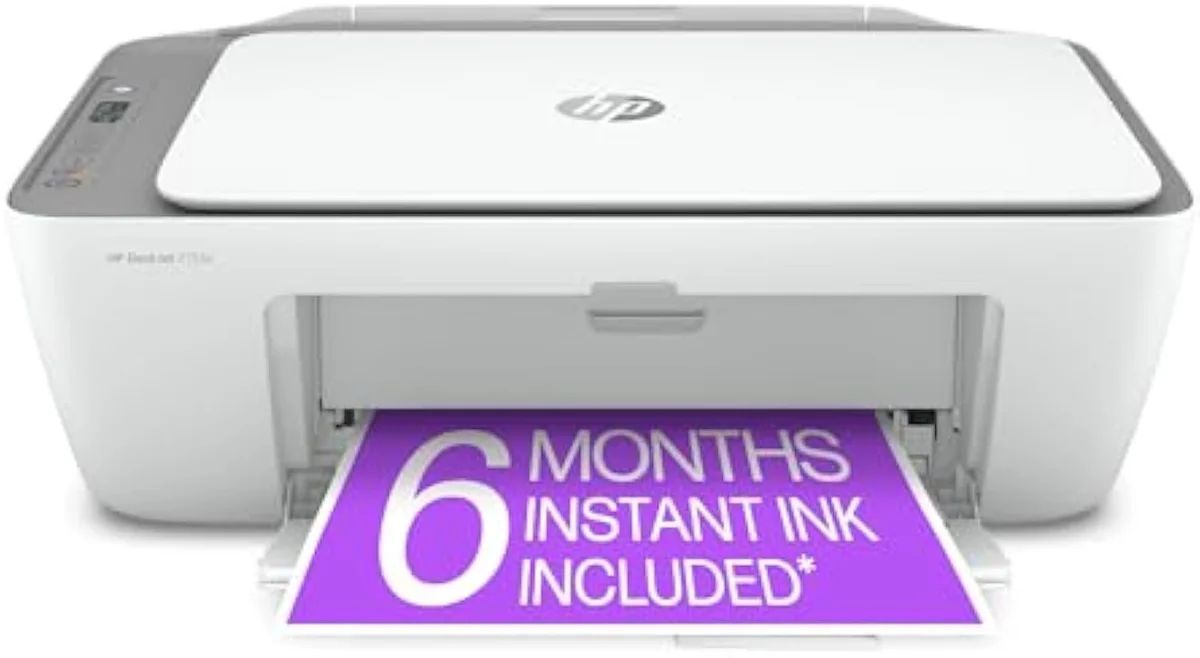
| RTINGS | HP DeskJet 2855e | Budget cartridge | Tested cost-per-print and risk-of-clogging on a cheap model |
| Consumer Reports | HP DeskJet 2855e | Budget cartridge | Survey predicted-reliability and satisfaction score |
| Tech Gadgets Canada | Epson EcoTank ET-2803 | Supertank | Cartridge-vs-tank cost-per-page crossover math |
| PCGuide | Canon PIXMA G3270 (G3570) | Supertank | Supertank bottle economics and output verdict |
| PCMag | HP OfficeJet Pro 8025 | Office all-in-one | ISO ppm speed, ADF and duplex functions, first-run setup |
| TechGearLab | Epson WorkForce Pro WF-4820 | Office all-in-one | Hands-on value ranking and running-cost comparison |
| TechRadar | HP Envy 6555e | Home all-in-one | Inkjet output review plus inkjet-vs-laser guidance |
| Wikipedia | (category, not a model) | Reference | Printhead technology, dye vs pigment, DPI, continuous-ink systems |
Reference numbers behind the claims
A reference figure is a standard number an authority anchors to, which is what makes its claims checkable. The table below collects the figures — yields, resolutions, speeds, and test standards — that recur across the sources and frame every cost-per-page claim (Wikipedia).
| Reference figure | Typical value | Class it describes | Source category |
|---|---|---|---|
| Black yield per cartridge set | 120 to 200 pages | Budget cartridge (DeskJet 2855e) | Independent lab testing |
| Black yield per XL set | 400 to 600 pages | Mid-range cartridge | Cost-focused analysis |
| Black yield per bottle set | 4000 to 7500 pages | Supertank (ET-2803, G3270) | Cost-focused analysis |
| Mono print speed | 10 to 20 pages per minute | Office all-in-one (WF-4820) | Editorial review |
| Photo print resolution | 4800 by 1200 DPI | Photo supertank (ET-8550) | Encyclopedic reference |
| Yield test standard | ISO/IEC 24711 and 24712 | All classes | Encyclopedic reference |
| Speed test standard | ISO/IEC 24734 | Office and home all-in-ones | Editorial review |
| Monthly duty cycle | 1000 to 5000 pages | Home to office models | Manufacturer specification |
| Models in our owner-review pool | 59 models | Whole catalog | Owner-review synthesis |
| Printers in the lab test set | 182 printers | Lab coverage | Independent lab testing |
| Document print resolution | 1200 by 1200 DPI | Office all-in-one (OfficeJet 8025) | Editorial review |
| Starter (in-box) cartridge yield | about 100 pages | Budget cartridge | Manufacturer specification |
| Process ink colors (CMYK) | 4 colors | Standard document inkjets | Encyclopedic reference |
| Distinct authority domains in this hub | 8 sites | Source coverage | Owner-review synthesis |
How much weight each source type carries
Trust weight is the share of a verdict a source category is allowed to move. This table is our editorial weighting — a transparent default, not a neutral average — for how heavily each category counts (RTINGS).
| Source category | Trust weight | Claim it carries best |
|---|---|---|
| Independent lab testing | 30% | Tested cost-per-print and clog risk |
| Institutional survey | 22% | Predicted reliability at scale |
| Cost-focused analysis | 18% | Cartridge-versus-tank crossover math |
| Editorial review | 16% | Setup friction and print-quality verdicts |
| Encyclopedic reference | 8% | Technology definitions and mechanisms |
| Manufacturer specification | 6% | Box claims, cross-checked against testing |