Inkjet Printer Comparison Criteria
Updated
Definitions
Cost-per-page is the running cost of a single printed page, calculated as the price of an ink set divided by its rated page yield. It is the one number that separates a cheap printer that is expensive to own from a dearer printer that pays itself back, and ink-tank reviews treat it as the deciding figure (Tech Gadgets Canada).
- Page yield
- Page yield refers to the number of pages an ink set prints under the ISO/IEC 24711 and 24712 standardized tests. Manufacturer figures are best-case, and real-world output runs lower, so independent testing re-measures it per model (RTINGS).
- ISO ppm
- ISO ppm is the print speed in pages per minute measured under the ISO/IEC 24734 office test — a more honest figure than the "up to" speeds on a spec sheet. Home all-in-ones rate roughly 10 to 20 pages per minute in mono, and editorial reviewers verify it directly (PCMag).
- Print resolution
- Print resolution is the density of dots a printer lays down, measured in dots per inch (DPI). Document all-in-ones print sharp text at modest resolution, while photo inkjets reach 4800 by 1200 DPI or finer for smooth gradients (Wikipedia).
- Monthly duty cycle
- Monthly duty cycle is the maximum number of pages a printer is rated to handle per month — often near 1000 pages on budget models and several thousand on office models. Sustained printing above it shortens printhead life.
- Subscription and firmware lock
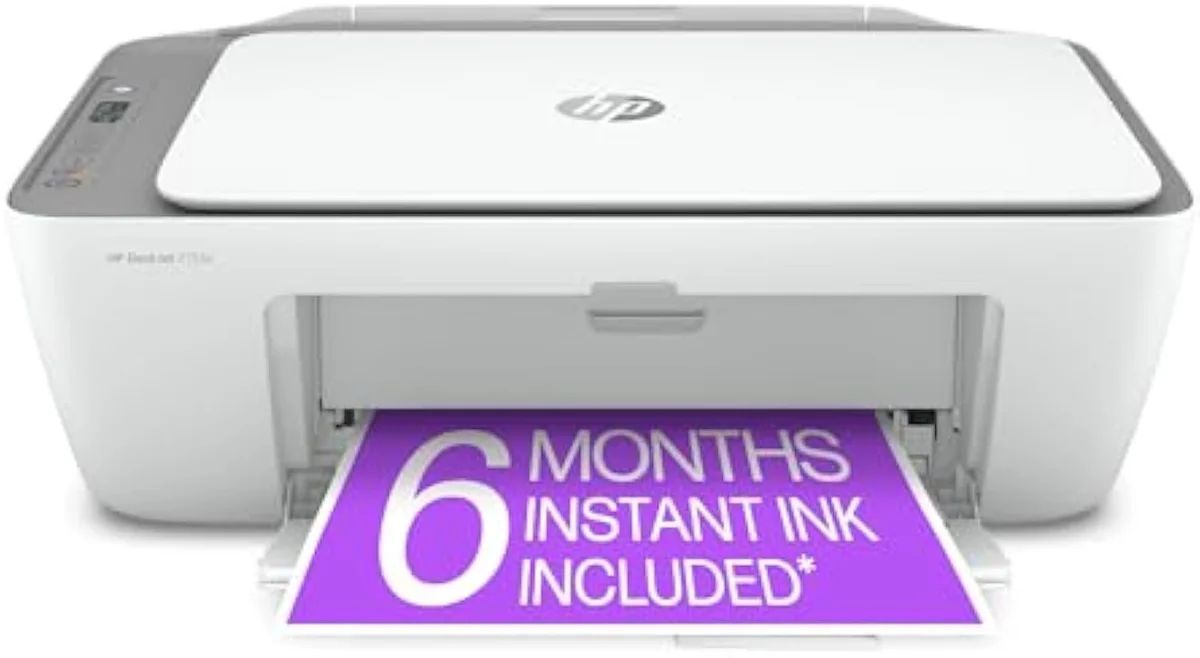
- Ecosystem lock is the set of restrictions a maker adds after purchase: subscription ink such as HP Instant Ink billed by the month, and firmware that rejects third-party cartridges. Both convert a one-time buy into a recurring cost.
- Supertank (ink-tank)
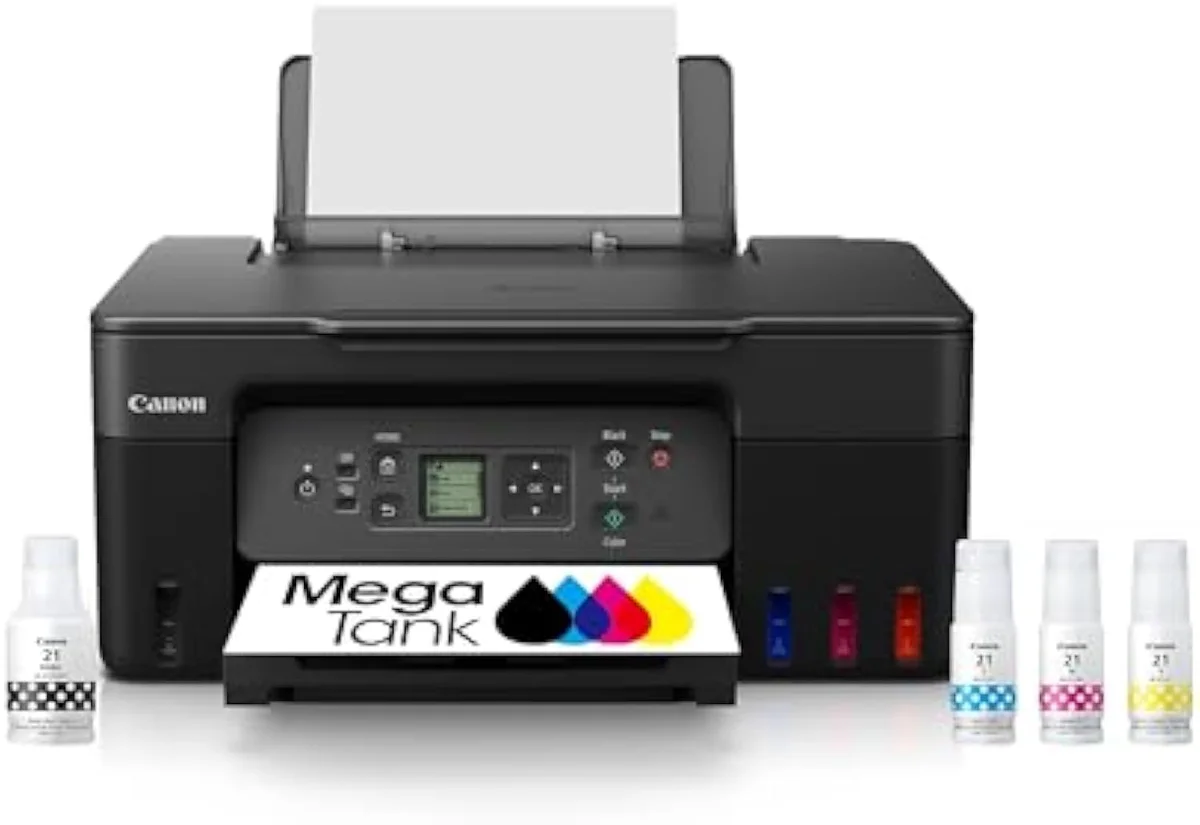
- A supertank printer is a continuous-ink-system design that replaces cartridges with refillable reservoirs and high-yield bottles, the architecture that drives cost-per-page down (Wikipedia); editorial supertank reviews lead with the bottle economics (PCGuide).
- Duplex and ADF
- Duplex is automatic two-sided printing without flipping pages by hand. An ADF, or automatic document feeder, is a tray that pulls multi-page documents through the scanner for hands-free copying — the two features that decide whether one machine replaces a separate scanner and copier.
- Dye vs pigment ink
- Dye ink is water-based for vivid photo color, while pigment ink sits on the paper surface for sharper, more water-resistant text. The split is why a photo printer and a document printer make opposite ink choices (Wikipedia).
Criteria overview
Six criteria decide an inkjet purchase. The table below names what to measure for each and why it carries weight; the running-cost row is the axis the rest of this framework orbits, because editorial supertank testing puts bottle economics ahead of the spec sheet (PCGuide).
| Criterion | What to measure | Why it matters | Default weight |
|---|---|---|---|
| Running cost | Cost-per-page: ink-set price divided by ISO page yield | Over a printer's life this dwarfs the purchase price; a cartridge set can approach the printer's own price | Highest |
| Reliability when idle | Printhead clog rate after 2 to 3 weeks unused; cleaning-cycle ink waste | Inkjets that sit idle clog, and recovery wastes ink or can brick a head | High |
| Wireless setup | First-run Wi-Fi / AirPrint success; app or account requirement | Setup failure is the most common one-star complaint across every brand | High |
| Print quality | Text sharpness and ISO ppm speed versus borderless photo saturation | Splits by use — document buyers and photo buyers want opposite output | Medium (use-dependent) |
| All-in-one functions | Scan, copy, ADF, duplex, fax versus desk footprint | Decides whether one device replaces a separate scanner and copier | Medium (use-dependent) |
| Ecosystem freedom | Third-party-ink acceptance, firmware locks, subscription requirement | Lock-in adds a recurring cost and a cancellation risk after purchase | High for subscription-wary buyers |
Cost-per-page by printer class
The running-cost row resolves to one reference table. Cartridge classes and refillable supertanks separate by roughly an order of magnitude per page, and the yield-per-set gap is what produces it (Tech Gadgets Canada).
| Printer class | Ink format | Typical mono cost-per-page | Typical black yield per set |
|---|---|---|---|
| Budget cartridge all-in-one | Small starter cartridges | ~10–25¢ | ~120–200 pages |
| Mid-range cartridge all-in-one | XL / high-yield cartridges | ~5–12¢ | ~400–600 pages |
| Refillable supertank | Refill bottles | ~0.5–2¢ | ~4,000–7,500 pages |
Yield figures follow the ISO/IEC 24711 and 24712 test standards; the page-yield numbers a printer prints in practice run below the lab estimate, so independent testing re-measures cost-per-print per model (RTINGS).
How we weight each criterion
The weights below are our editorial rubric, set from owner evidence and independent testing, not a neutral average. Running cost takes the largest share because the cartridge-versus-tank gap runs to several multiples per page (Tech Gadgets Canada), and reliability ranks second because clog risk is scored as a first-class printer attribute by independent labs (RTINGS).
| Criterion | Weight | What the evidence shows |
|---|---|---|
| Running cost | 30% | Cartridge all-in-ones run several times the per-page cost of refillable supertanks; ink-tank analyses treat this as the deciding axis |
| Reliability when idle | 20% | Risk-of-clogging and cleaning-cycle waste are scored as explicit printer attributes by independent testing |
| Wireless setup | 18% | Setup friction is the leading one-star cause in owner reviews, and editorial reviewers test and flag it directly |
| Print quality | 14% | Editorial testing rates document and photo output on separate axes; few printers lead both |
| All-in-one functions | 10% | Scan, copy, ADF, and duplex are binary per model and verifiable on the spec sheet |
| Ecosystem freedom | 8% | Subscription and firmware-lock backlash is a recurring purchase driver for a large buyer segment |
When each criterion matters most
Weights are a default, not a verdict. The right lead criterion shifts with the buyer, and editorial reviewers reach different conclusions for a home office than for a photo desk (TechGearLab). This table maps the common profiles to the criterion that should decide the buy.
| Buyer profile | Lead criterion | Also weigh | Walk-away signal |
|---|---|---|---|
| Cost-conscious household (weekly mixed printing) | Running cost (cost-per-page) | Clog risk when idle | A cartridge set that costs near the printer price |
| Home office (documents, duplex, ADF) | ISO ppm speed plus duplex and ADF | Running cost | No automatic duplex; slow rated ISO ppm |
| Photo or craft hobbyist | Photo output (dye ink, borderless) | Running cost of photo ink | Pigment-only output or weak borderless saturation |
| Low-volume / occasional printer | Clog resistance when idle | Setup simplicity | A clog-prone head with costly cleaning cycles |
| Subscription-wary buyer | Ecosystem freedom (third-party ink, no subscription) | Running cost | Firmware that blocks non-OEM cartridges; required subscription |