What is the difference between Epson ET-2400 and 2800?
Updated
Very little that changes how the printer works. Both are cartridge-free Epson supertanks — Epson sells the dearer one as a
- Up-front price — the cheaper model trims to undercut the real decider
- Status display + panel polish on the dearer model cosmetic, not capability
- Print engine, bottle ink, page yield identical on both
- Cost-per-page identical on both
- Idle-clog risk identical on both
Here's the thing: two model numbers usually buy a real gap — a faster engine, a bigger tray, a different ink system. This pair does not. According to Epson EcoTank inkjet printer specifications, both entry models pour ink from the same refillable bottles, hit the same rated page yield, and share the same single rear tray. The dearer one carries a small monochrome display the cheaper one drops, plus a little setup polish. That is the whole printer-level difference, which is why a buyer should anchor the choice to price, not to the higher number.
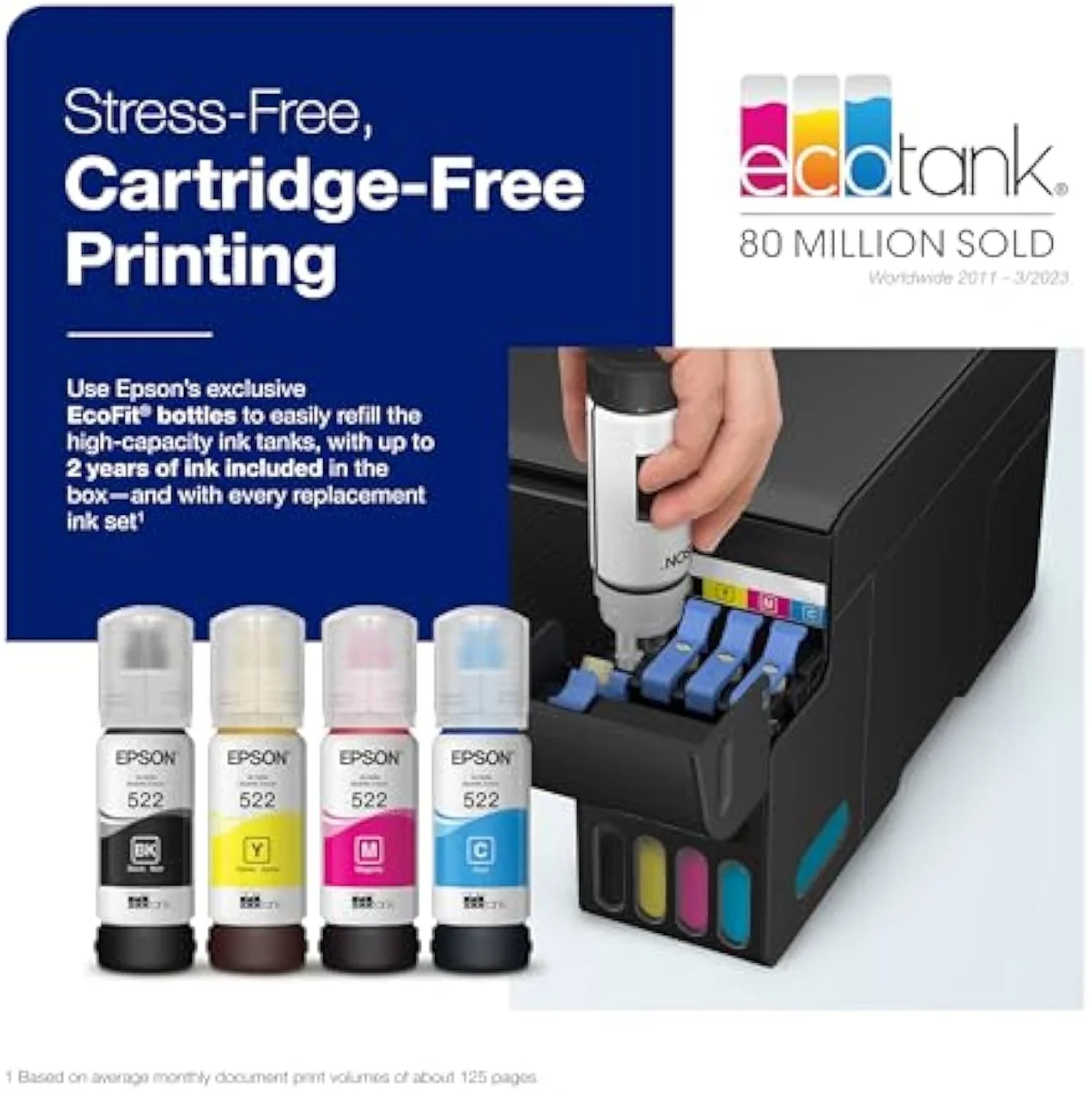
ET-2400 — front
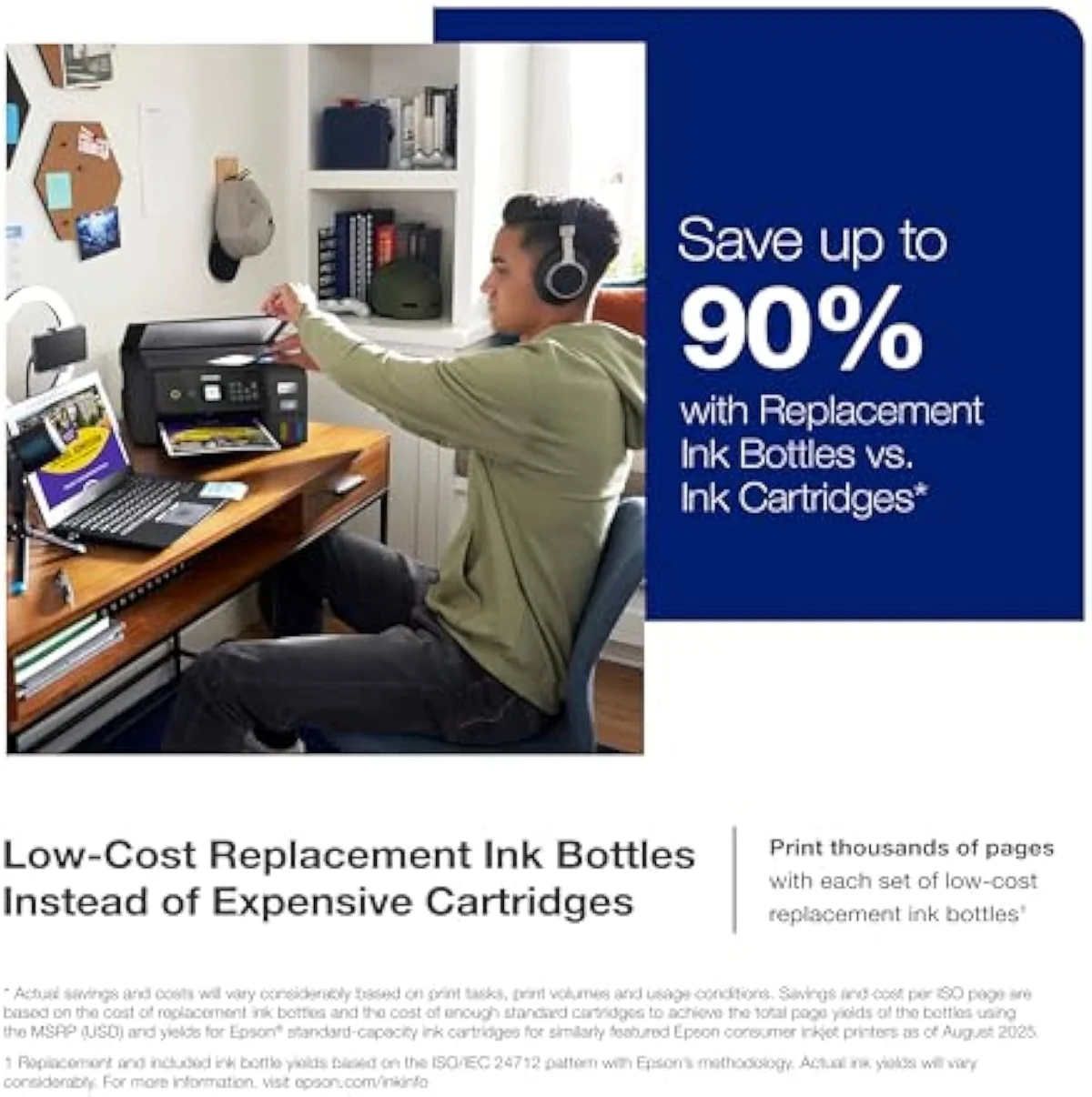
ET-2800 — front
What stays the same is the entire reason to buy either one: the running cost. Epson pitches the cheaper model on
It buys a status screen, and not much else.
The owner record settles it from the cross-shopping angle. A buyer who put the cheaper model next to its near-twin ET-2803 — itself the
Is the Epson EcoTank ET-2400 a good printer?
For a cost-watching home, yes. It is the cheapest entry into Epson bottle ink, with the same page yield and cost-per-page as the dearer ET-2800. Owners praise the cartridge-tax savings and call output adequate for documents. The catches are a flimsy plastic body, modest speed, muted colour, and no auto-duplex. Buy it for weekly home printing, not for an office or for photos.
Take the praise and the pushback together, because both are fair. The savings land: the cheaper model runs the same bottle-ink system that
Which is better, Epson 2400 or 2803?
They are near-identical entry EcoTanks with the same bottle-ink economics. Owners who cross-shopped them found the same shelf price, with the newer ET-2803 printing only a couple of seconds faster per page. Neither changes cost-per-page. Buy whichever is cheaper on the day unless a small feature splits them — the print engine and yield are shared.
Honestly, this is the same answer as the ET-2800 question wearing a different number. The ET-2803 is the dearer model's cartridge-free twin, and the cheaper ET-2400 sits a notch below it on panel and polish, not on capability. The one owner who lined the cheaper model up against the ET-2803 reported
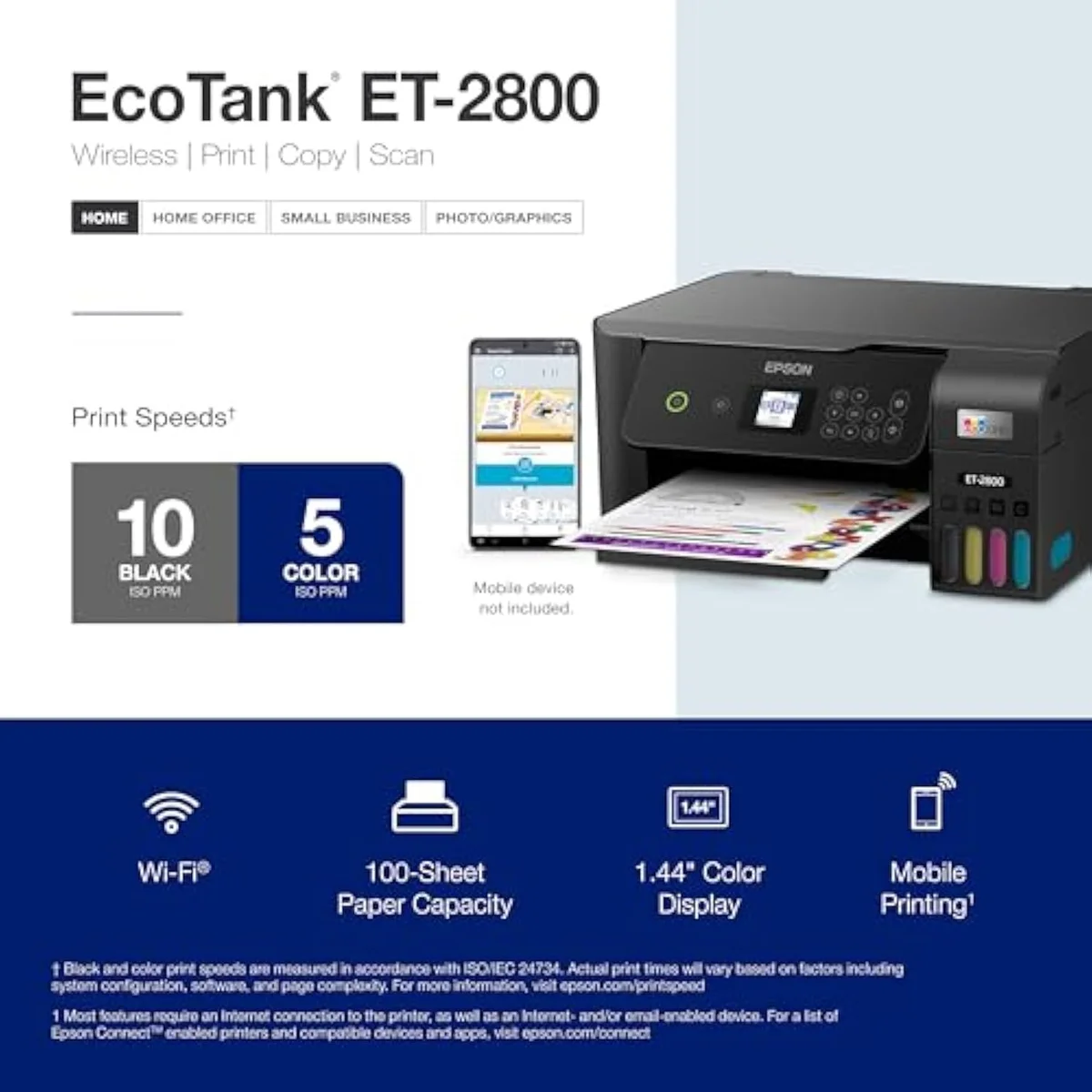
ET-2800 — tank fill
ET-2400 — tank fill
What are the downsides of Epson EcoTank?
The downsides apply to both the ET-2400 and ET-2800 because both are EcoTanks. A clog risk if the printer sits idle, a flimsy plastic build on the entry models, modest speed, no auto-duplex, and a higher up-front price than a cartridge machine. For a home that prints most weeks, the cheap bottle ink more than offsets them; for a desk that prints twice a year, the clog risk dominates.
The downsides here are EcoTank-wide, not model-specific.
The clog is the one that catches buyers out, and it falls on both models equally. A community owner put the rule plainly:
Is the Epson SuperTank a good printer?
For the right buyer, the EcoTank class is the cheapest printer to own. Bottle ink quotes thousands of pages per fill and cuts running cost far below cartridges — the reason both the ET-2400 and ET-2800 exist. The condition is steady use: leave any EcoTank idle for weeks and the head clogs and wastes ink self-cleaning. Print weekly and it earns its place; print rarely and a laser fits better.
Here's the thing: the supertank question is really the volume question. The dearer model runs the same cartridge-free tank system as the cheaper one, and reviewers confirm
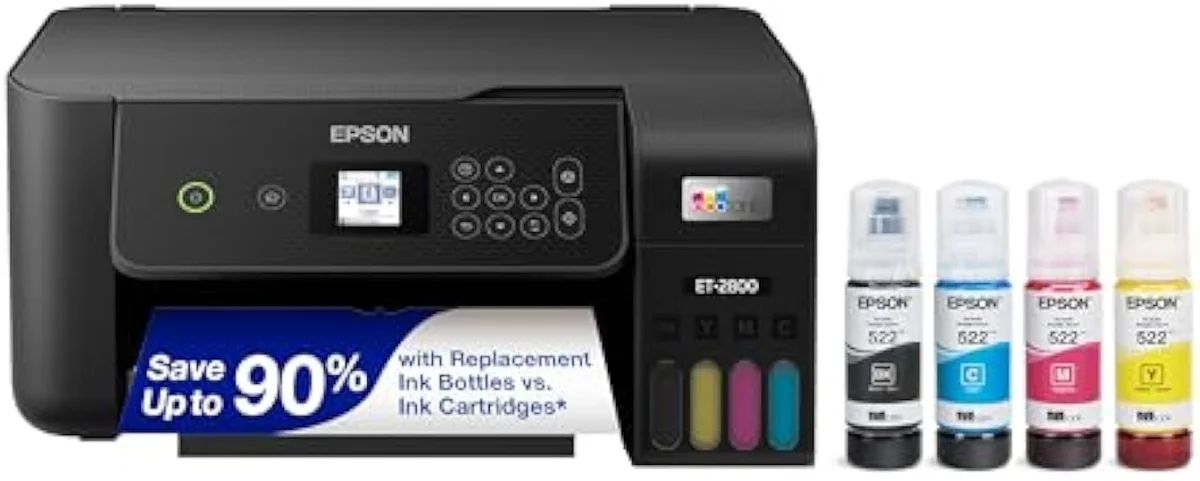
So the verdict is a price call, not a capability call.
Add it up and the ET-2400-versus-ET-2800 question answers itself: there is barely a printer to compare. Both are entry Epson supertanks running one engine, one bottle-ink system, and the same rated yield, so cost-per-page, photo quality, paper handling, and clog risk are shared. The dearer model adds a small status display and a little polish; the cheaper one drops them to undercut on price. No yield gap, no feature that reshapes the decision. So the right move is the unglamorous one: buy whichever is cheaper and in stock, and if your real problem is office speed or duplex rather than the panel, step up the EcoTank ladder instead of paying a premium for the higher entry number. That one distinction — cheaper entry tank versus a printer built for more — settles every part of this comparison.
Get Our Top 3 Picks
Get our top 3 picks for your budget — one email, then only updates.
Only when something changes. Unsubscribe anytime.
Citations
- [1]"each ink bottle set is equivalent to about 80 individual ink cartridges"https://www.amazon.com/dp/B0BM9BFLMXCaptured June 3, 2026. Verified June 3, 2026.
- [2]"Save up to 90% with replacement ink bottles vs. ink cartridges"https://www.amazon.com/dp/B0BM9BFLMXCaptured June 3, 2026. Verified June 3, 2026.
- [3]"that’s enough to print up to 4,500 pages black/7,500 color"https://www.amazon.com/dp/B0BM9BFLMXCaptured June 3, 2026. Verified June 3, 2026.
- [4]"Up to 2 years of ink in the box"https://www.amazon.com/dp/B0BM9BFLMXCaptured June 3, 2026. Verified June 3, 2026.
- [5]"High-capacity ink bottles provide a high page yield, allowing you to print thousands"https://www.amazon.com/dp/B096N8DN2HCaptured June 4, 2026. Verified June 4, 2026.
- [6]"Wireless Color All-in-One Cartridge-Free Supertank with Scan and Copy"https://www.amazon.com/dp/B096N8DN2HCaptured June 4, 2026. Verified June 4, 2026.
- [7]"Both it and the 2400 were the same exact price at my Walmart"https://www.amazon.com/dp/B096N8DN2HCaptured June 4, 2026. Verified June 4, 2026.
- [8]"EcoTank ET-2803 Wireless Color All-in-One Cartridge-Free Supertank Printer"https://www.amazon.com/dp/B096N8DN2HCaptured June 4, 2026. Verified June 4, 2026.
- [9]"Very cheap plastic body. Feels easy to crack if you press too hard."https://www.amazon.com/dp/B0BM9BFLMXCaptured June 3, 2026. Verified June 3, 2026.
- [10]"Color printing quality on regular paper was very adequate though not photo quality."https://www.amazon.com/dp/B0BM9BFLMXCaptured June 3, 2026. Verified June 3, 2026.
- [11]"it doesn't do automatic double-sided printing. You have to flip the paper manually"https://www.amazon.com/dp/B0BM9BFLMXCaptured June 3, 2026. Verified June 3, 2026.
- [12]"ink tank printers are still inkjet printers, and thus are subject to the heads drying out"https://www.amazon.com/dp/B096N8DN2HCaptured June 4, 2026. Verified June 4, 2026.